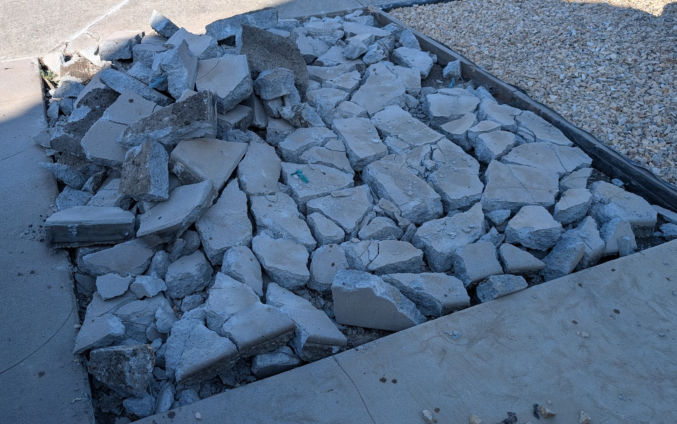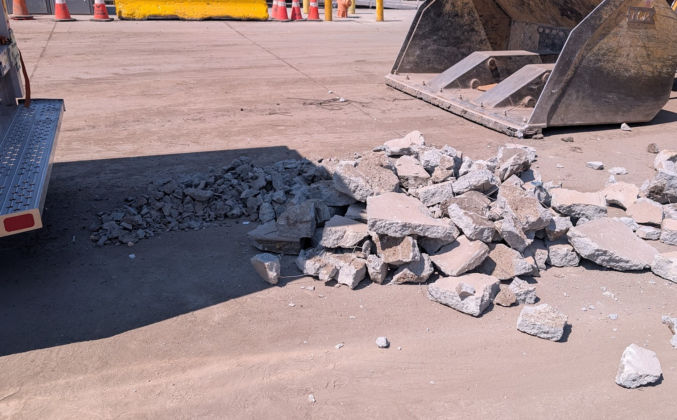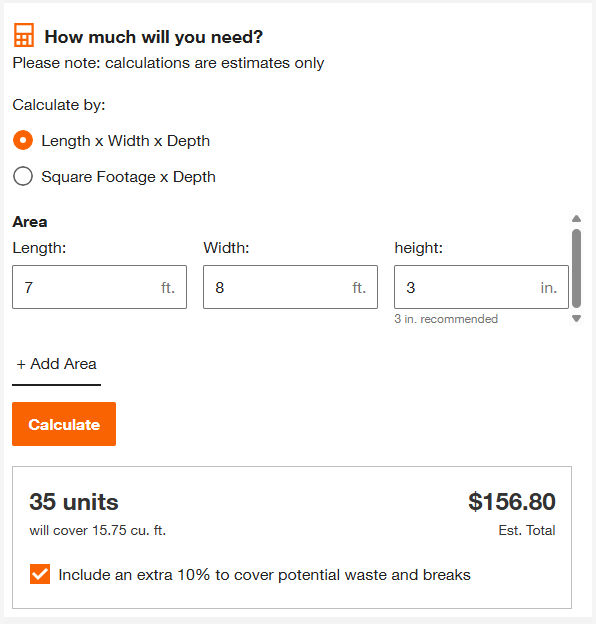


One of the concrete slabs (7′ x 8′ x 3″) by my driveway was cracked and sunken. The previous owner created the slab and didn’t include rebar. I paid someone $75 to break the slab into small chucks.
He used my jackhammer to break the slab, which you can buy on Amazon for $140.
I then rented a box truck from Home Depot for $29 / 75 minutes and took the concrete to GreenWaste. The cost to dump the concrete was $54.
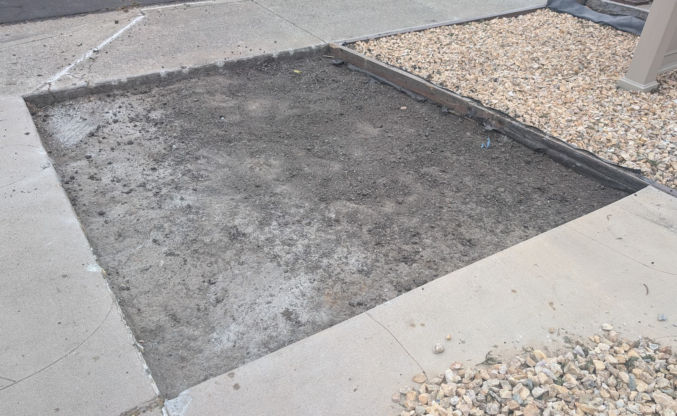
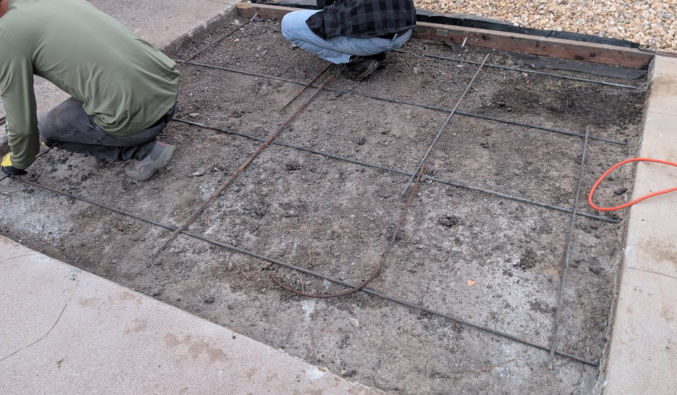
Here’s how the space looked after removing the concrete. I would need about 0.5 cubic yards of concrete.
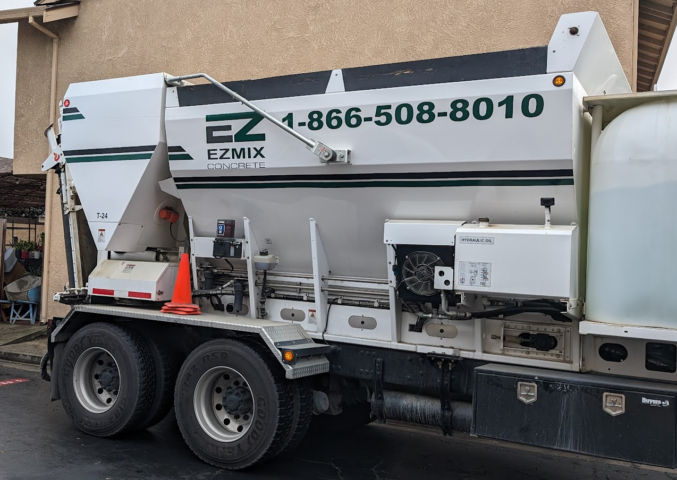
If I wanted to pay a concrete supplier like EZ-MIX CONCRETE to deliver pre-mixed concrete by truck, it would have cost me about $600 because they charge a minimum of 2 cubic yards.
I posted an RFQ on Yelp and Thumbtack and got the following quotes for both labor and materials:
Contractor 1: $1200
Contractor 2: $950
Contractor 3: $800
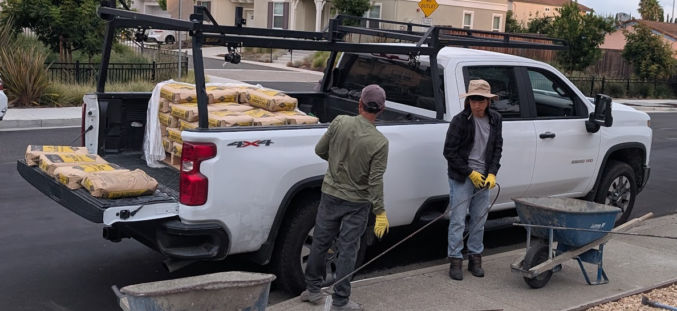
Contractor 3 happened to live 2 blocks from me. I chose him because he showed me the sample concrete work he had done, which looked very good, and his quote was the most reasonable. He went to Home Depot to buy rebar and about 35 bags of 60 lb concrete.
According to Home Depot, the concrete cost would be about $160 + tax, which includes 10% extra concrete.
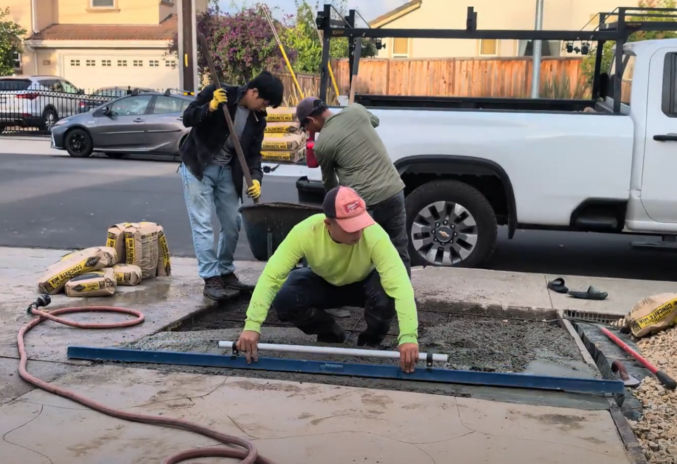
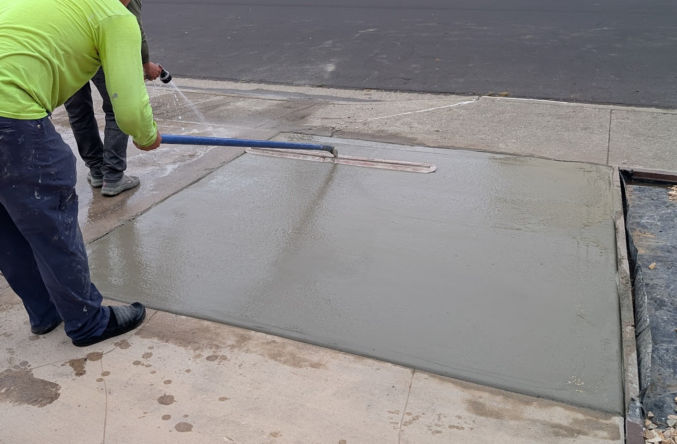
There were 3 workers who came at 7 AM to start the project. First, they cut the rebar using an angle grinder and laid it down.
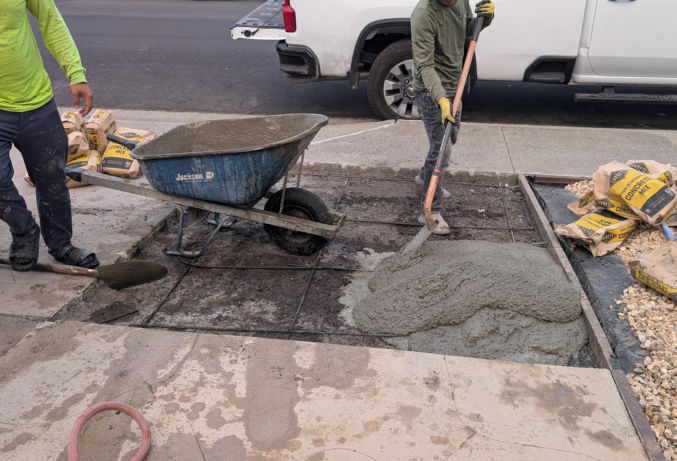
They then mixed the concrete with water in a wheelbarrow by hand using small shovels.
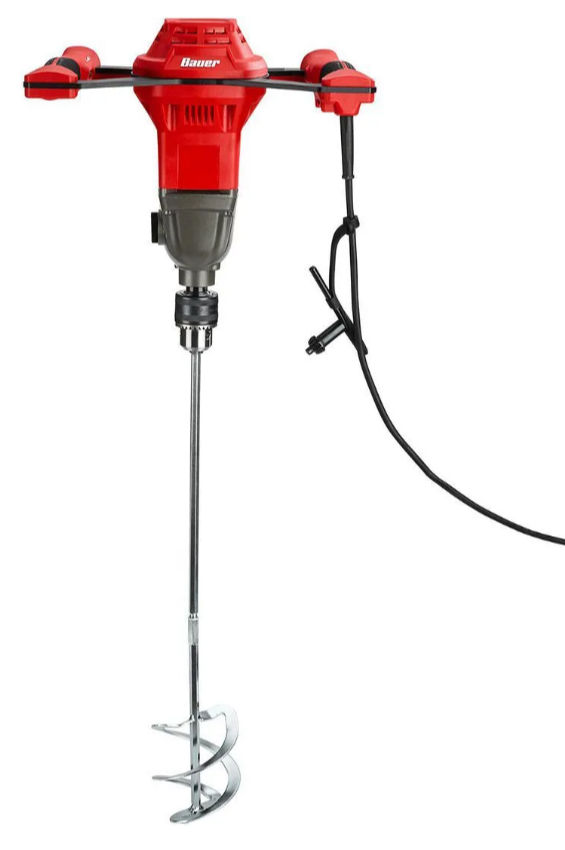
They should have just used an electric mixer to make mixing easy.
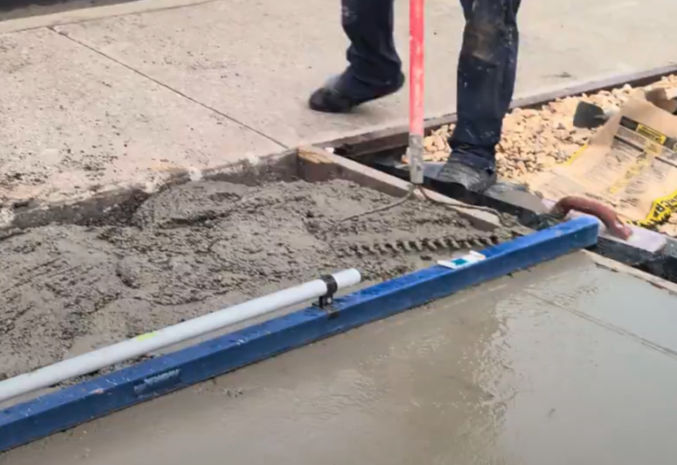
They then used a rake and a long bar to push and even out the wet concrete.
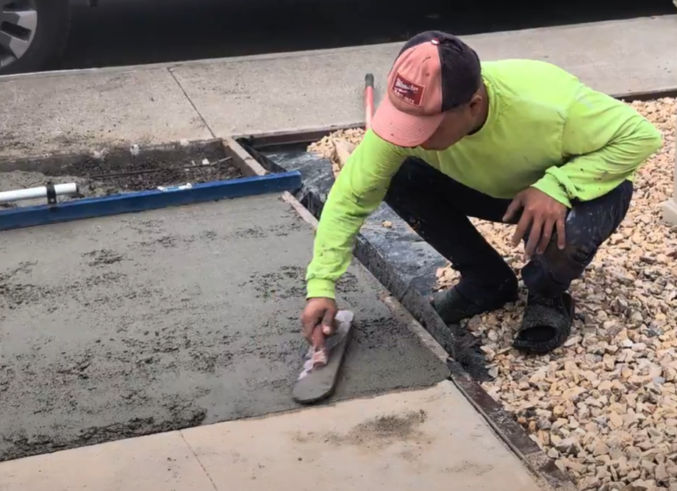
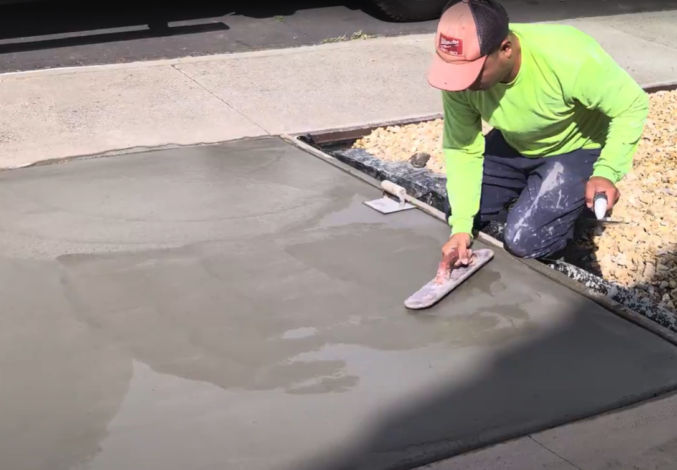
They then used a rough float to even out the surface.
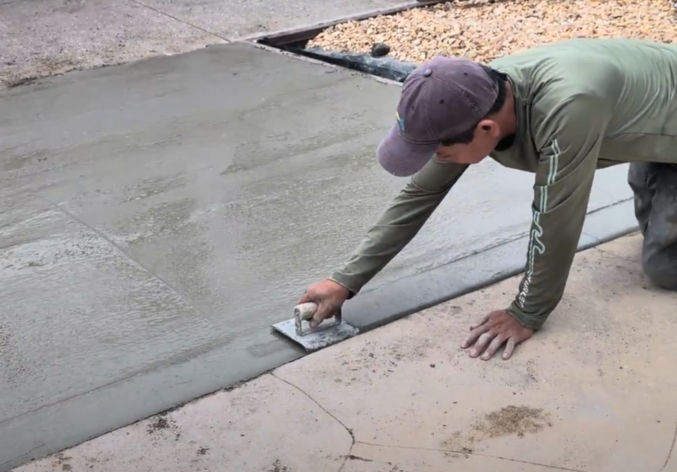
They then used a large float to smoothen the surface.
Cypress trees are fast-growing, tall, narrow, evergreen trees.
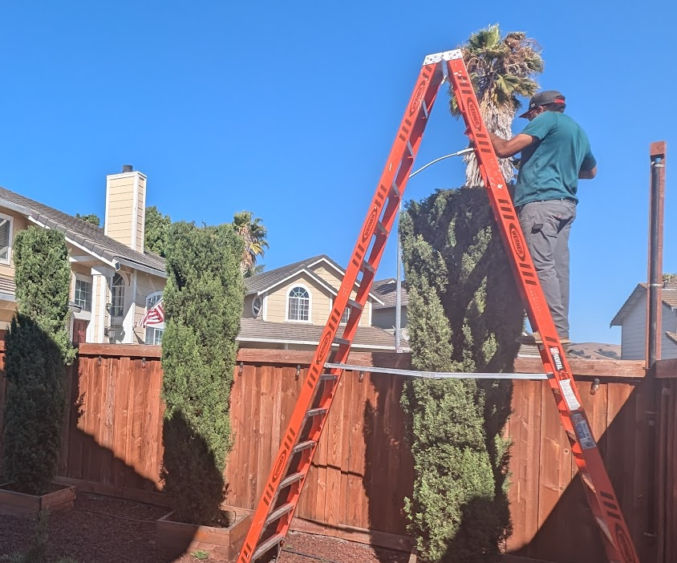
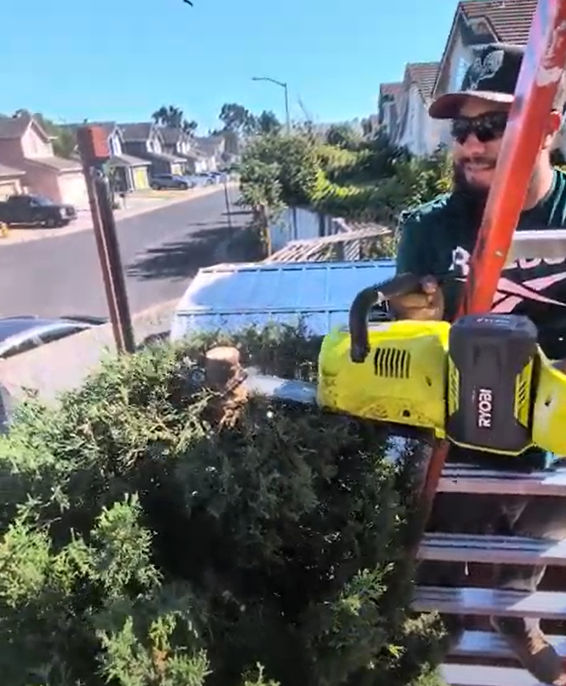
They look nice, but if they grow too tall and it’s very windy, they can become a liability if they fall and damage your or someone else’s property. Unless they’re located far from where they can cause damage, the safe thing to do is to cut them short. If you wait too long, cutting the top off can be difficult and expensive. For example, in the video below, you can see one person on a ladder cutting the tree trunk on one side and two people on the ground holding and pulling a rope tied to the top part of the tree to ensure the tree falls away from damaging anything.
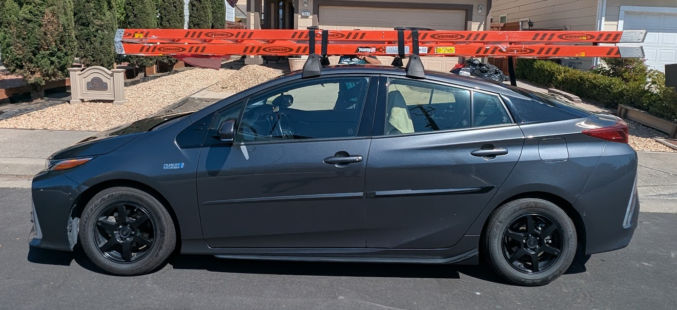
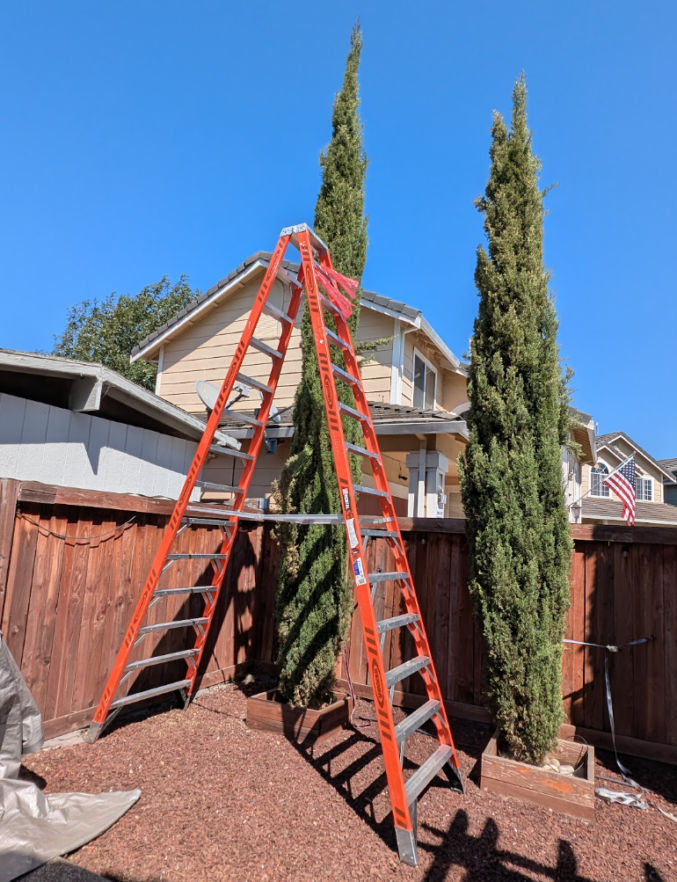
Cutting tall Cypress trees can be expensive. For that reason, it’s best to cut these trees before they get too tall. For example, I have 6 Cypress trees in my backyard. I was able to cut them so they were about 10′ tall. I rented a 14′ A-frame ladder from Home Depot and strapped it to the roof rack of my car using heavy-duty ratchet straps.
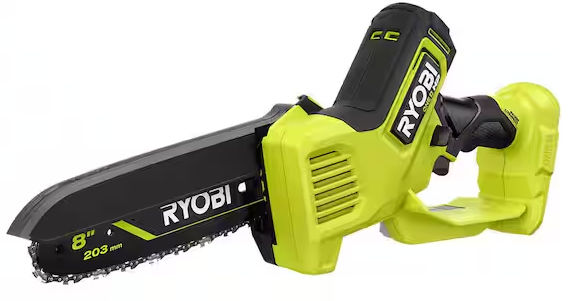
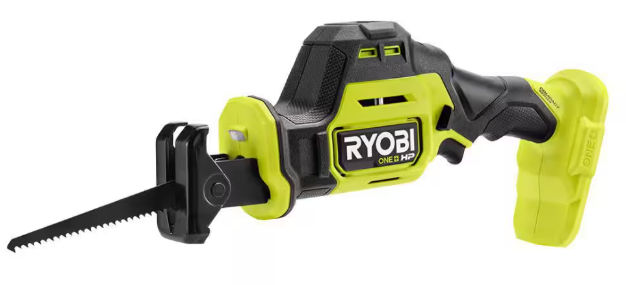
If the trunk was too difficult to cut with the sawzall, I’d use my Ryobi 40V HP Brushless 14 in. Battery Chainsaw. Cutting the trunk with this chainsaw was easy but a bit dangerous as you had to hold it with two hands due to its size and weight, unlike the one-handed compact sawzall.
To be safe, you can have someone hold the ladder while you’re up on it or strap the ladder to the tree or a nearby fence to prevent it from falling over.
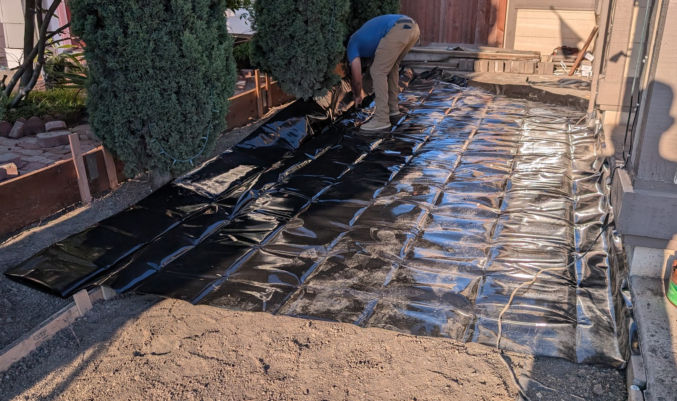
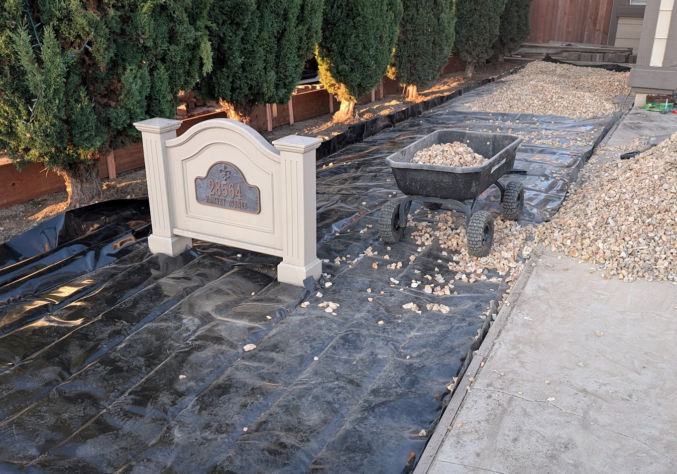
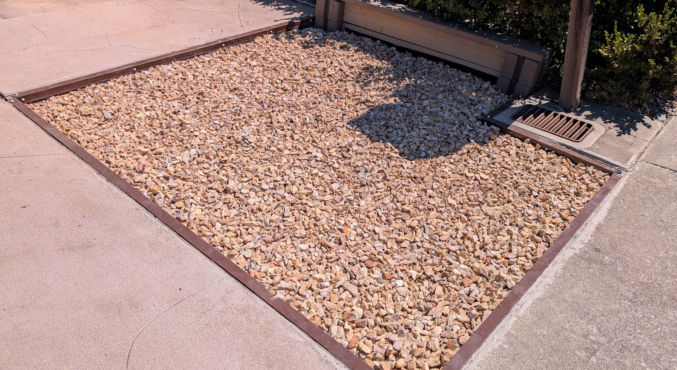
To eliminate maintenance and water costs, I replaced my front yard with rocks and 6 Cypress trees. The front yard slopes away from the house toward the street. Since I don’t need to water any plants or trees (the Cypress trees can survive off of rainwater in the Winter), I put down 20-mil thick pond liner. Where two pieces of pond liner meet, I overlap them by 12 inches.
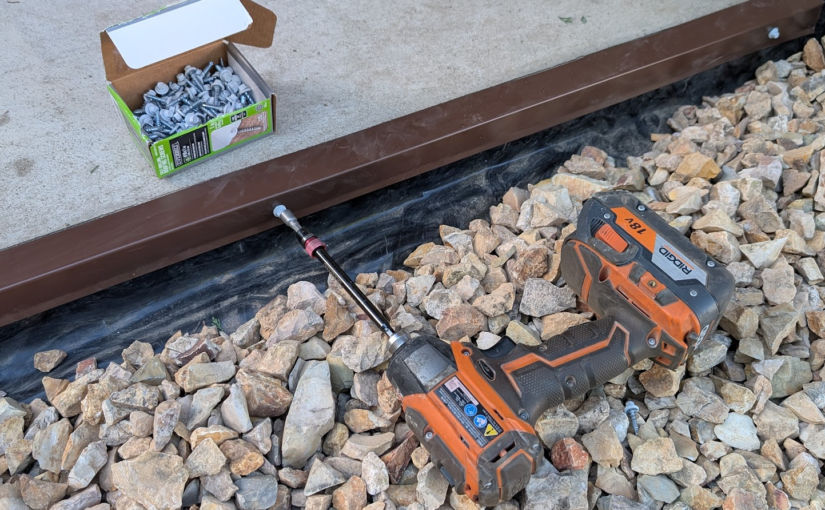
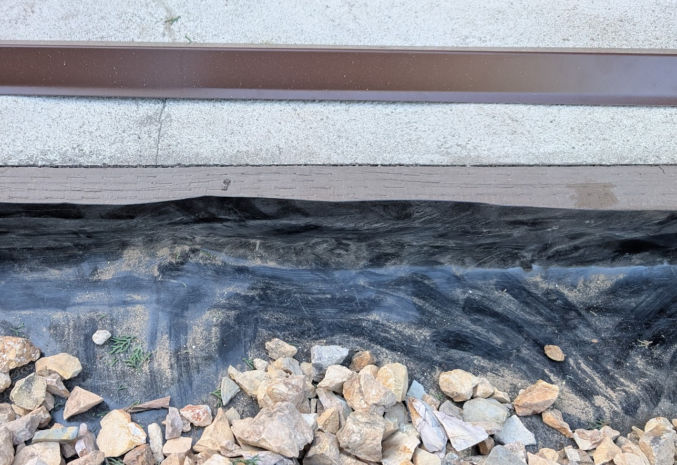
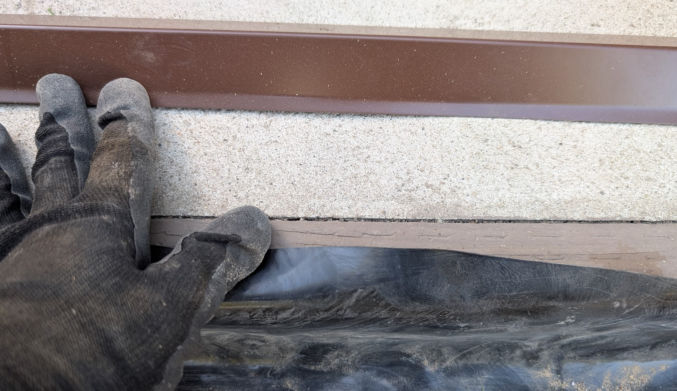
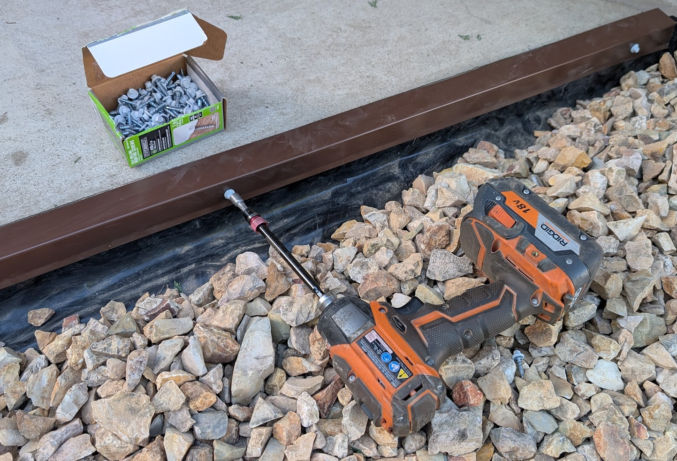
Along the perimeter, I screwed 2x4s into the sides of the concrete using concrete screws. I stapled the pond liner to the 2x4s along the perimeter and then screwed 1.5″ x 1.5″ brown drip edge to prevent weeds from sneaking their way up along the crevices.
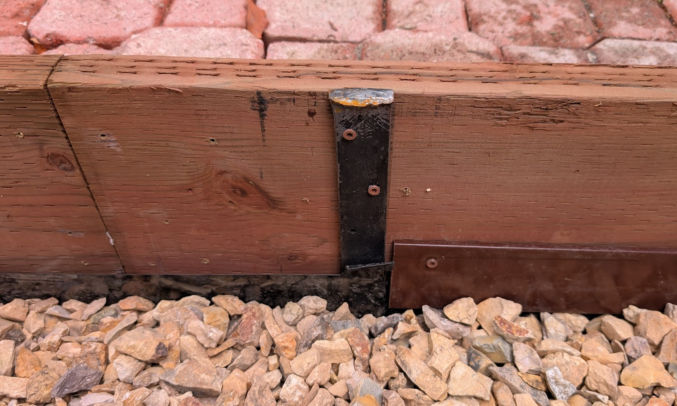
If one of your edges is not a standard concrete slab, you may install a short retaining wall. In my case, I made a wall using 12″ wide pressure-treated wood that I held in place using metal stakes. I used brown deck screws that were designed for exterior use to minimize rust and corrosion.
I should have placed the pond liner under the wood before securing the wood in place. Since I didn’t do that, I stapled the pond liner to the side of the wood and then screwed thin wood wrapped in brown plastic (bender board) over the pond liner and into the wood. That should prevent weeds from growing between the wood retaining wall and the pond liner.
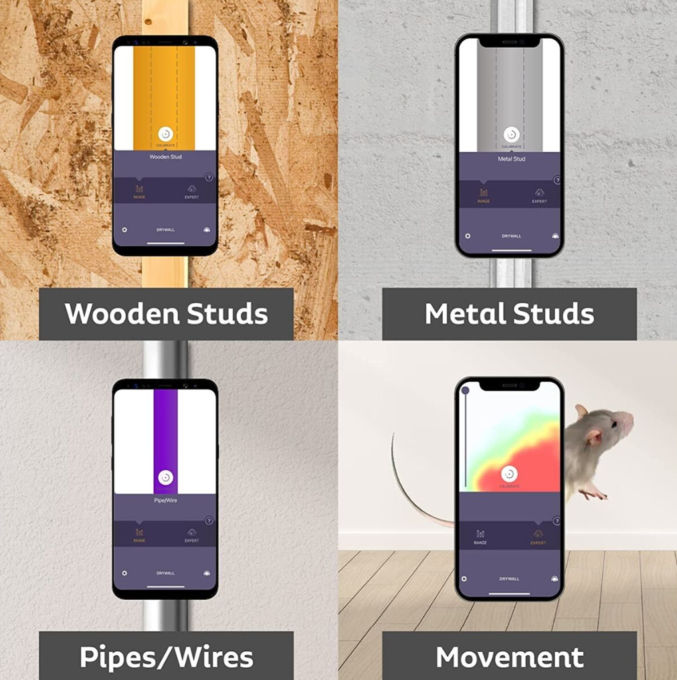
As a real estate investor, I’m often needing to know what’s behind some drywall. I normally use a stud finder, but after removing a bunch of drywall, I sometimes find pipes, which, unlike electrical cables, are difficult to move, so I end up wasting my or my contractor’s time patching a wall back up. So, I bought the Walabot DIY 2, which claims to be able to detect wood and metal studs, plastic and metal pipes, and wires behind drywall up to 5/8″ thick and 4″ deep.
I put this to the test and compared it to my Franklin ProSensor M150, which can detect wood and metal studs as well as live wires up to 1.5″ deep.
I tested both sensors on an actual wall with pipes and live wires as well as a test wall.
My test wall below has, from left to right,
2×4 stud
15A Romex wire (non-live)
Pressure-treated 2×4 stud
2×4 stud
2″ black ABS drain pipe
Metal copper pipe
2×4 stud
The Walabot DIY2 detected all items, but it couldn’t differentiate between a wire and a pipe. Also, the Walabot got a bit confused by the 2 touching studs in the middle because of the small gap between the studs. The Franklin only detected the wood studs, but it detected them very well, including the two touching studs.
On an actual wall with wood studs, pipes and live wires, the Walabot performed the same, and it couldn’t differentiate between pipes and wires. The Franklin sensor, however, was able to detect live wires. The lightning symbols lit up yellow when a live wire was detected, as shown below.
Conclusion
It looks like both detectors are needed to see what’s behind your walls. I’d use them as follows:
Use the Walabot first to mark all wood/metal studs, and pipes/wires.
Use the Franklin to confirm the location of the wood/metal studs and to determine whether the pipe/wire detections by the Walabot are live wires or pipes. If the Franklin detects live wires, then that’s what they are. If the Franklin doesn’t detect anything where the Walabot detected a pipe/wire, then there’s a pipe there.
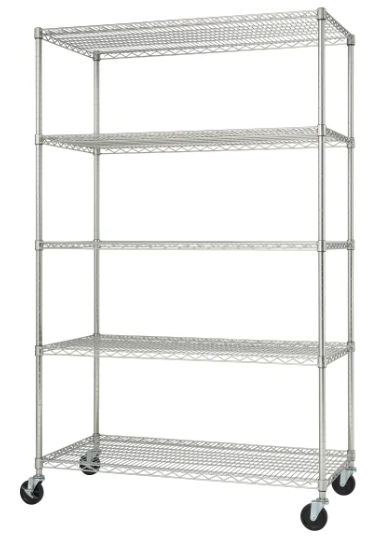
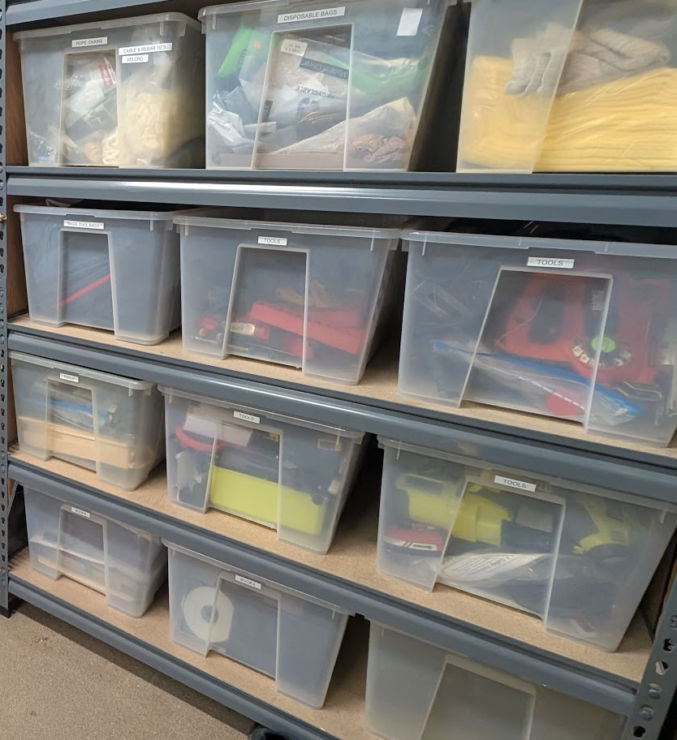
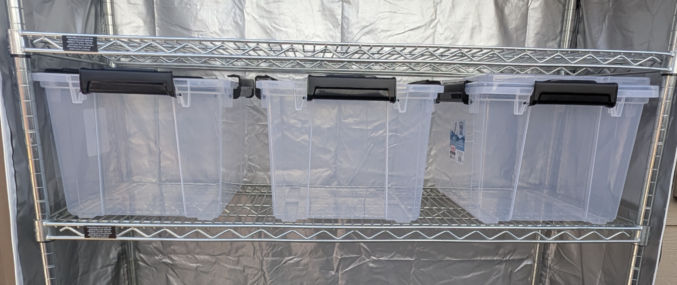
In America, many people use their garages as storage rooms rather than what they were intended for (parking vehicles). I do the same, but I also use my garage as a home gym. Along the side walls are 5-tier shelf racks with wheels and on each shelf there are 3 transparent plastic containers.
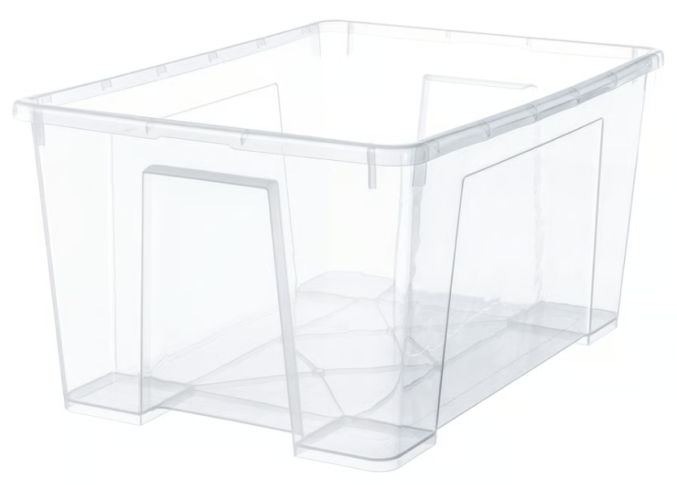
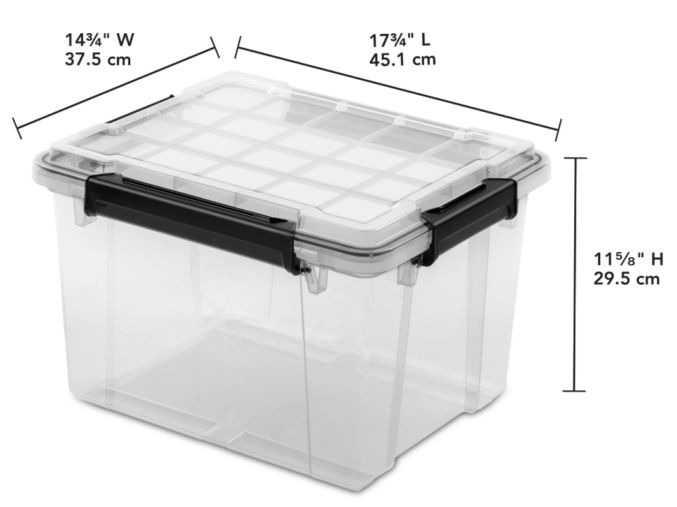
If you place 3 of these bins on one shelf, they might protrude a bit from an 18″-deep by 48″-wide shelving rack. If that bothers you, you can buy these 34-quart Sterilite gasket boxes that are slightly smaller.
Having shelves with wheels makes it easy to move everything around.
But what do you do when you are renovating or remodeling your garage or if you need a temporary place to store your stuff for about 6-12 months. You can put everything in a self-storage unit, but for a 20’x20′ garage worth of stuff, you’re looking at paying hundreds of dollars a month if you are in the San Francisco Bay Area. You can buy a shed and put it in your backyard, but a large one would cost you around $1500, and you may not necessarily have the space for a large one in your backyard. Plus, you’d have to spend a lot of time assembling it, and it’s more of a permanent solution rather than a temporary one.
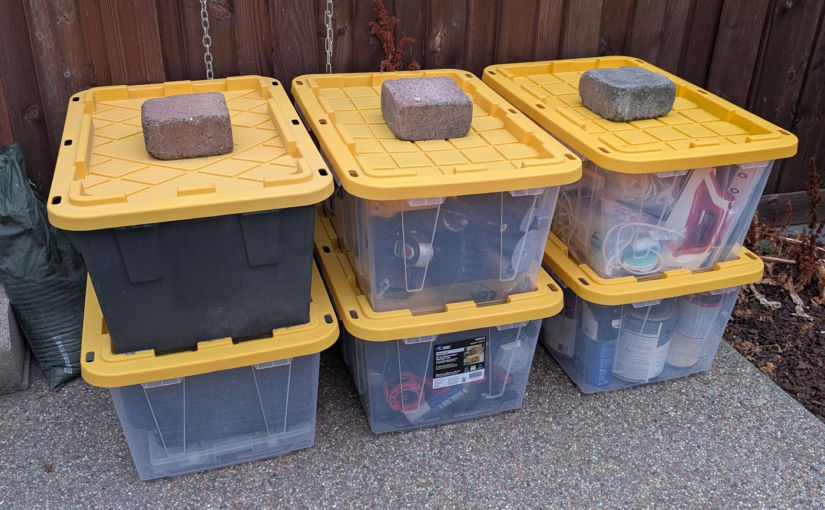
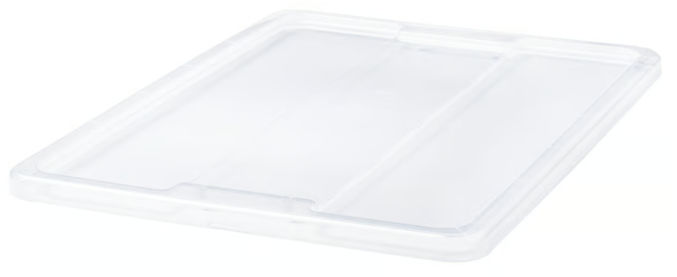
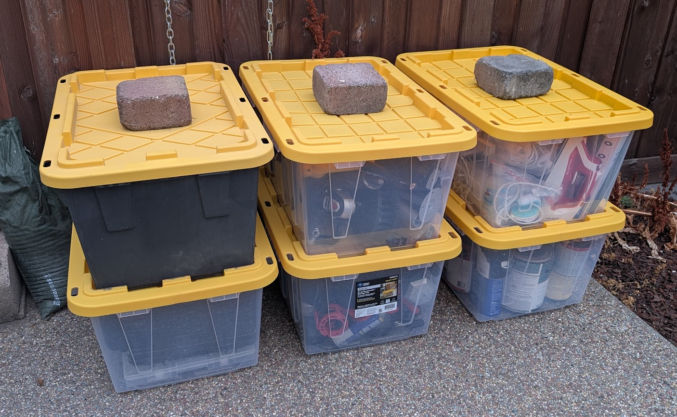
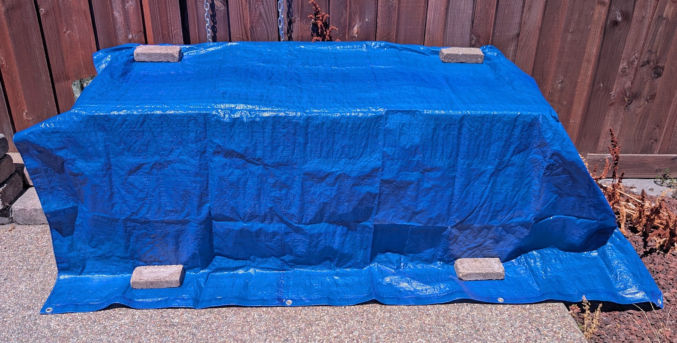
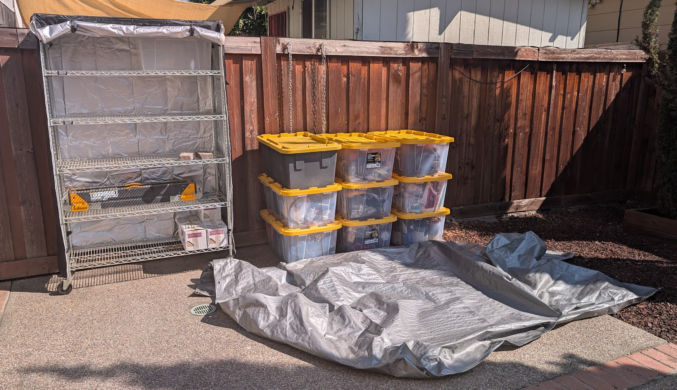
One low-cost option is to simply put your stuff in heavy-duty plastic storage containers with lids and stack them up in your backyard. Since they come with a lid, you wouldn’t need a shed because they are waterproof. If you’re worried strong winds could blow the lids off, just place something heavy on them, like a concrete paver.
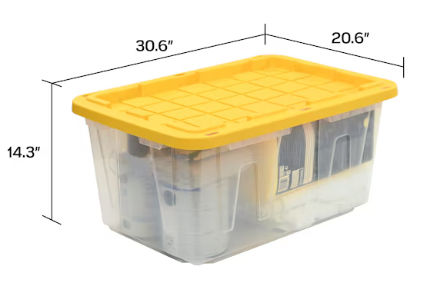
The 27-gallon plastic bins are a good size as they’re not too big to carry and they’re not too small to fit somewhat large items.
The transparent kind is nice because you can see what’s inside and don’t need to necessarily label each bin. If you do want to label the bins, you can buy a label maker. This Brother P-touch PT- D610BT can print up to 1″ labels, making it easy to read them from a distance.
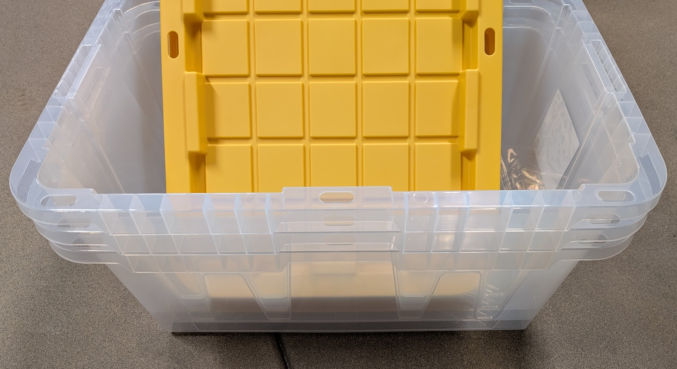
As of this writing, the price for a 27-gallon bin is $14, so even if you needed 35 of them, you’re only paying $500 for them, and when you’re done using them, you can easily empty the contents and stack them inside each other for future use.
UPDATE: Costco Business Center has the same 27-gallon bins for $11. Both the bin and the lid are transparent, which is even better.
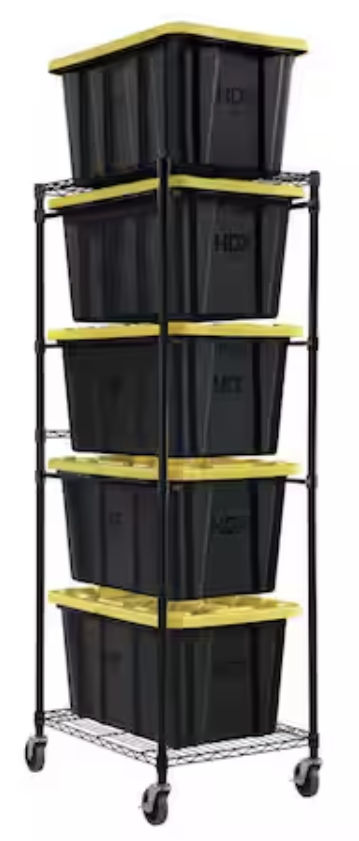
Stacking those storage bins is fine if you don’t need to access the contents often. But if you do need frequent access, you can buy a shelf designed for these 27-gallon bins.
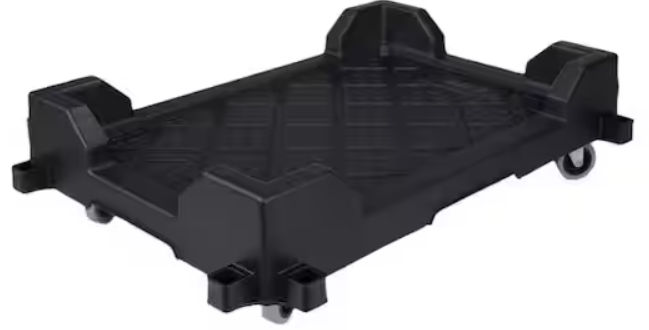
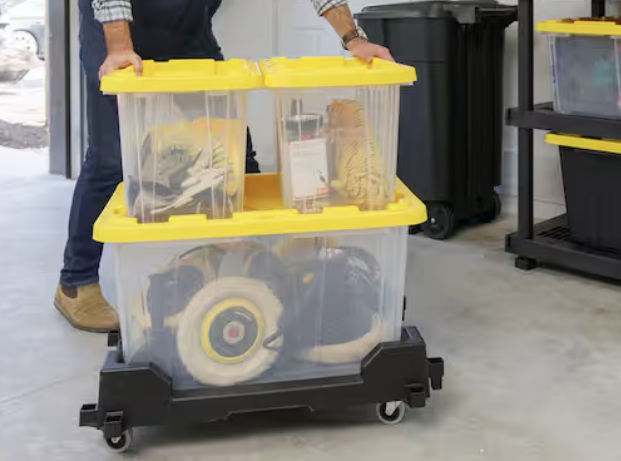
If you have a lot of stuffed bins, some of which may be heavy, you don’t want to have to carry each one. For convenience, you can just buy this 27-gallon storage tote taxi.
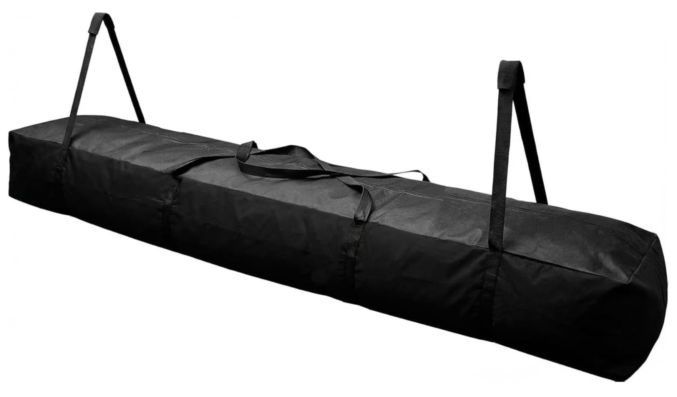
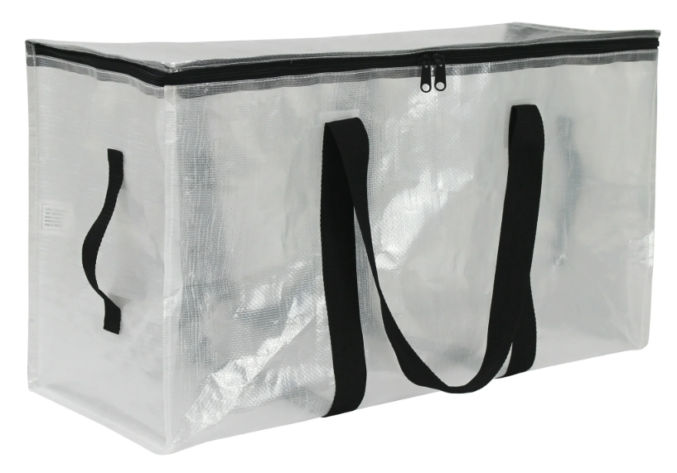
Now, you may have some long and narrow items that won’t fit in those 27-gallon bins. For these items, you can buy a long storage bag like the one below.
If you leave things exposed to the elements for a long time, they can become weathered and even break down. Thin plastic, for example, can become brittle from long exposure to the sun’s UV rays. To prevent this from happening, you can cover the bins with a heavy-duty tarp that is treated to prevent deterioration from UV rays.
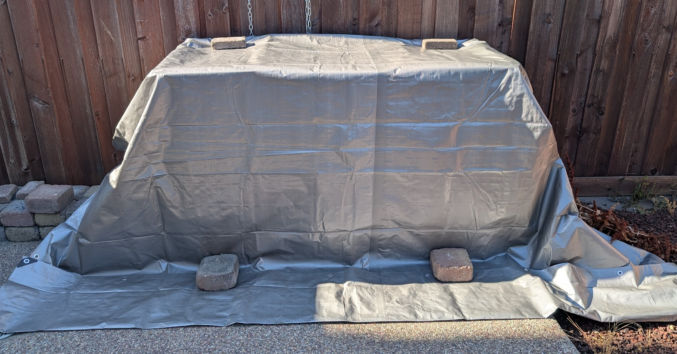
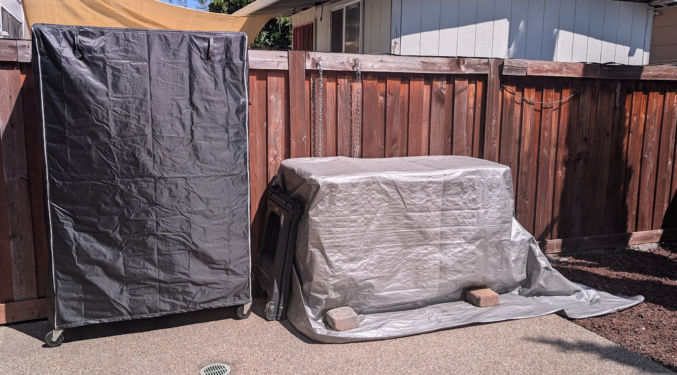
Or, you can buy a bigger tarp. The one picture below is 9mm thick (heavy duty) and from Harbor Freight.
But what if you have a bunch of shelving racks with uncovered bins in them? In this case, rather than disassemble the racks and buy lids for those bins, you can buy a cover designed specifically for shelving racks. There are many on Amazon with many different sizes. I bought this 72″ H x 48″ W x 18″ D one on Amazon. It’s waterproof and the zippers make it easy to open one side when you need to get something.
If you have to store a bunch of clothes, a cheaper storage option is to put the clothes in a cardboard box or a plastic tote bag, like this.
For just $5, these large, 20-gallon plastic totes are cheap and, since they’re designed for light items, like clothes, you can easily carry them without the need for a platform truck or dolly. They also come with a zipper. If you go with cardboard boxes, not only are they not waterproof, but you’d have to use tape to close them, which is extra work.
So there you have it. A cheap, easy, and organized way to temporarily store stuff in your backyard.
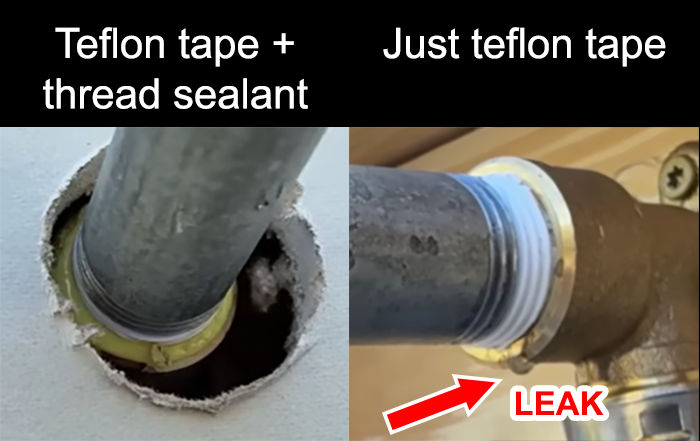
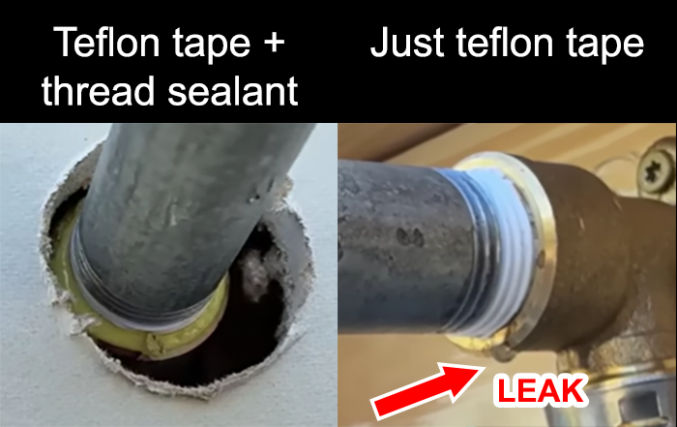
Most homeowners and, surprisingly, some plumbers, only use Teflon tape around pipe threads. While this often is sufficient to prevent leaks, it is not the best practice. For more reliable results, always use a combination of Teflon tape followed by thread sealant.
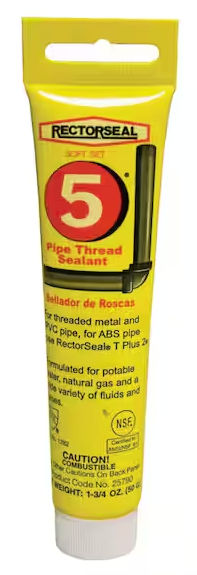
One of the most popular thread sealants is RectorSeal #5.
As a real estate investor, I’ve had to replace many toilets. Normally, I do that while doing a complete renovation. The problem with many toilets is
the bolts to the toilet flange in the floor can get loose
the floor may not be perfectly level
These issues can cause a toilet to slide, rotate, and tilt.
Fixing a rocking toilet due to an uneven floor
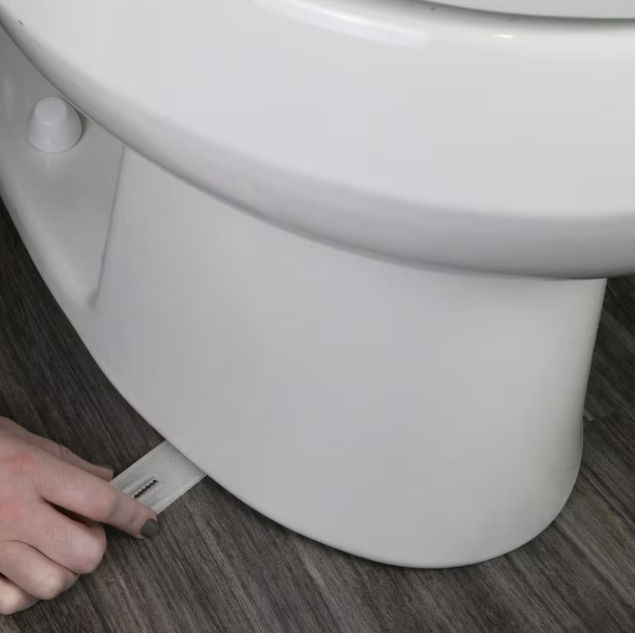
After renovating many bathroom floors with both tile and vinyl, it’s unfortunate that despite a contractor’s best effort to create a perfectly level floor, a small imperfection could cause a toilet to not sit evenly on the floor. The easily way to fix this is by installing plastic toilet shims on the LOW side of the toilet. Make sure to install it on the LOW side as the weight of the toilet will help keep the shim in place.
Fixing a loose toilet due to loose bolts
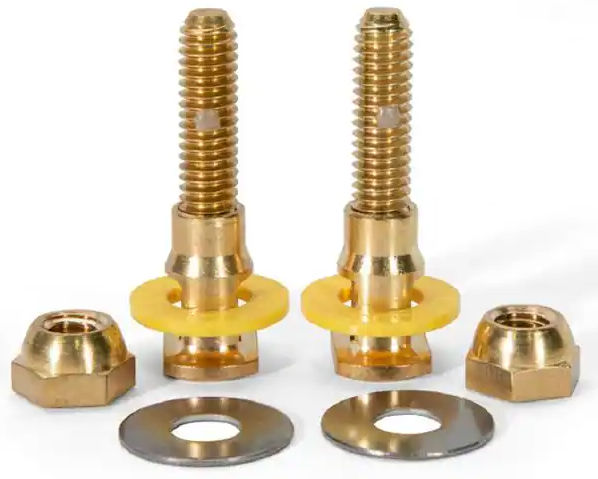
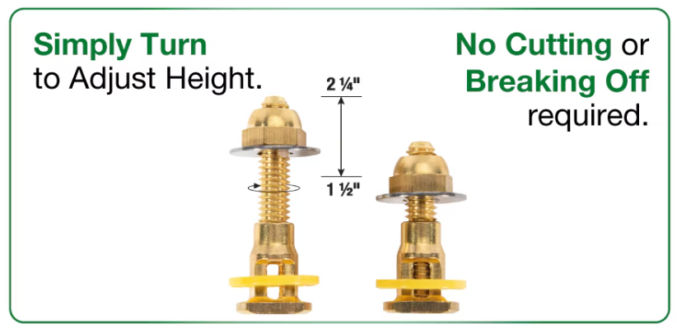
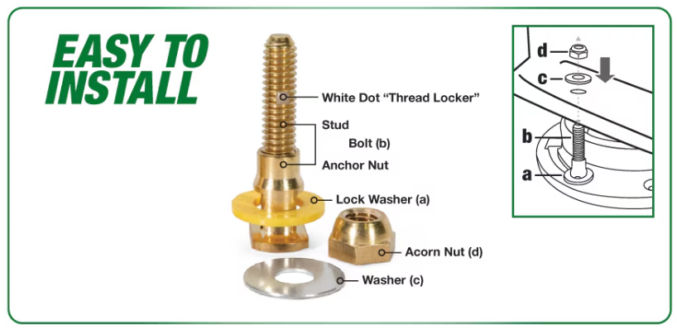
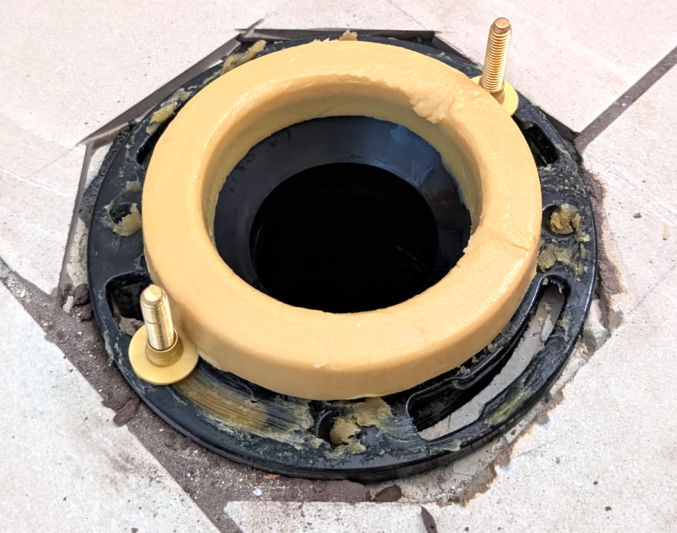
The bolts that come with many toilets are usually the cheap kind. Sometimes, they work just fine, but depending on your toilet flange and toilet, they may easily become loose, which is what happened to me. To remedy this, I replaced the cheap toilet flange bolts with the Fluidmaster SetFast 5/16 in. x 2-1/4 in. No-Cut Brass Closet Toilet Bolt Kit. Price at $8, which is about double the cost of the cheap bolts, these bolts don’t require any cutting and they securely hold your toilet in place. Unlike some other toilet bolts that come with a small head, the bolt head the Fluidmaster bolt is thick and wide, so the bolt remains within the toilet flange slot no matter what.
When you tighten the acorn nut, the height of the threaded stud decreases automatically.
The yellow lock washer is thick, which holds the bolt in place vertically as you place the toilet over the bolts. This is way better other toilet bolt kits, which either don’t come with a lock washer, or the lock washers are thin and flimsy.
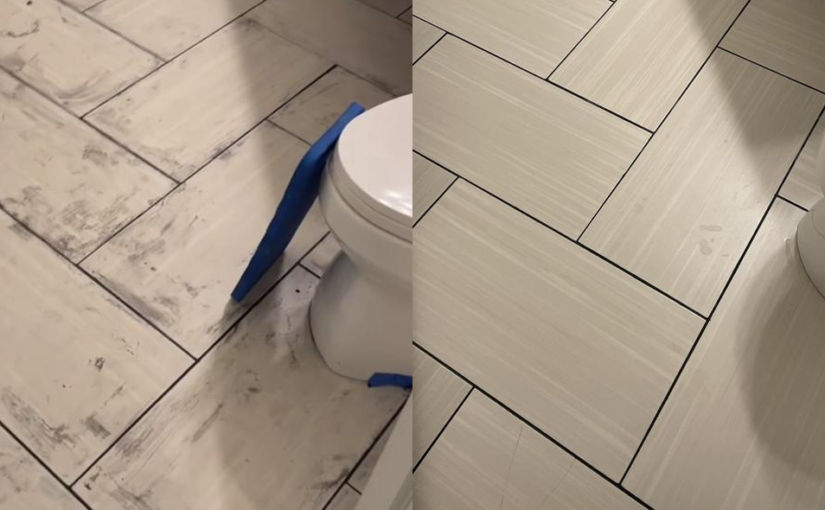
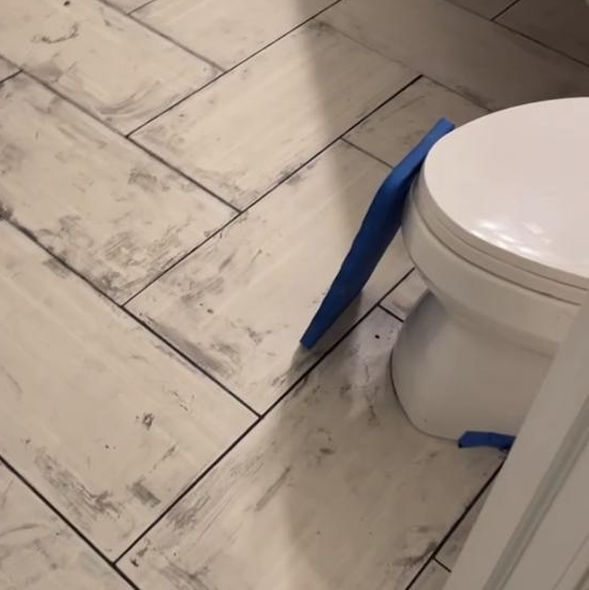
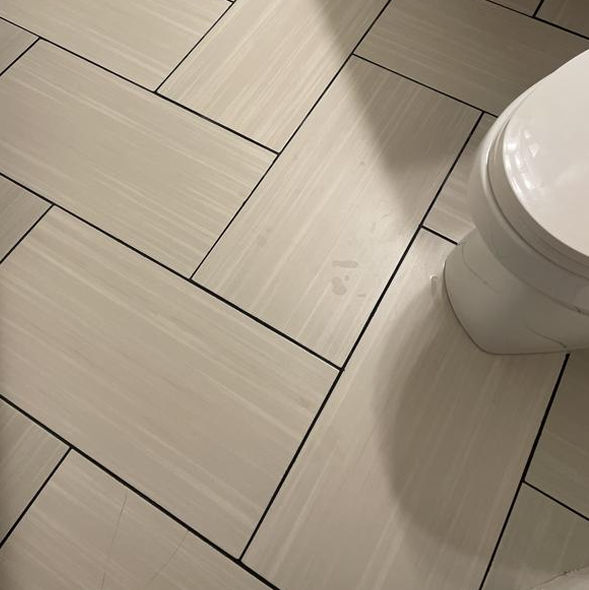
When applying grout to tile, you’re supposed to wait 15-30 minutes before wiping the grout of the tile while leaving the grout between each tile. This is easier said that done. No matter how good you are, you’ll probably be left with a thin layer of grout on your tile. If you use a light-colored grout on light-colored tile, you won’t notice the haze except at certain angles in certain lighting. The haze can resemble hard water stains. If you use a dark-colored grout on light tile or a light-colored grout on dark tile, the haze is more prominent, and your tile can look dirty. See example below.
Before
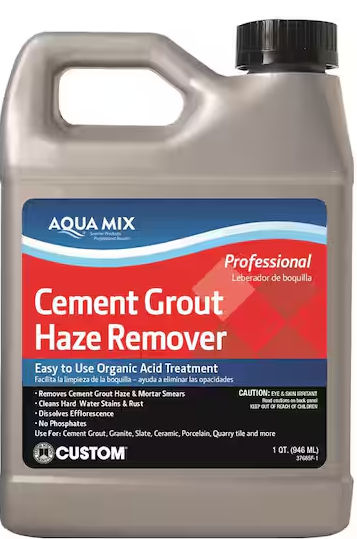
You can try to scrub with soap or even a steam cleaner, but that will have zero effect. Luckily, there is an amazing chemical product that can relatively easily remove the grout haze from tile. With Aqua Mix 1 Qt. Cement Grout Haze Remover by Custom Building Products, you just mix the liquid with water, pour some one the tile, wait a while, then rub the haze off. For tougher haze, don’t mix with water. In my case, I poured the liquid at full strength without adding water into a spray bottle, sprayed the liquid on the tile, then wiped the haze off with a rag. As most comments say on the Home Depot product page, this stuff is “amazing”!
To easily remove weeds from control joints in your concrete driveway, use an angle grinder with a wire wheel. I use a 4.5″ Ryobi brushed, cordless angle grinder. Don’t use a brushless angle grinder because it can’t be used for this purpose. I prefer using a knotted wire wheel. A non-knotted wire wheel works as well, but I find it better for cleaning control joints after removing large weeds using the knotted one.
To prevent kickback, stand and drag the tool to the right as shown in the photo below.
If the angle grinder flange lock nut is stuck, use either a pipe wrench or a thin wrench to unlock it. For convenience, clamp the angle grinder to a stationary vise.
Whether you hire a contractor directly or you are assigned one from your home warranty company, it’s important to check a number of things to prevent regret and liabilities. This is especially important when you are assigned a contractor from a warranty company because, speaking from personal experience, contractors who partner with home warranty companies tend to cut corners and behave unprofessionally, as I have experienced this multiple times.
1. Check License Status
Licensed contractors are registered with the state. Check the status of their license on the Contractor State Licensing Board (CSLB)’s website. It should state whether their license is active, suspended, or revoked. If it’s suspended or revoked, they probably didn’t do a good job and it’s illegal for them to do work they were licensed for, so stay away from them. For example, here’s the contractor page for Loves Air and their license status.
2. Check Classification, Bond, and Worker’s Comp Info
On the contractor’s page on the CSLB website, you should also check the contractor’s work classification, bond, and worker’s compensation info. Here’s an example for Loves Air.
2. Check Online Reviews
If you are looking for a reputable contractor or are assigned one, read their online reviews, e.g. on websites like Yelp. For example, compare the reviews of Loves Air to T N T Heating & Air, both of which are HVAC contractors. Don’t just look at the number of reviews and the average rating. Read past customer comments as well and how the company responds to customers.
This company got only 2.7 stars from 59 reviews. After reading customer comments, it’s obvious that you should stay very far away from this company. Here’s a response from the owner to a customer’s comment. This tone and choice of words says it all.
Unsurprisingly, this company was chosen by many home warranty companies.
4. Check building permit history
Go to your local government (city / county) website and search for building permits associated with the contractor. For example, T N T Heating & Air serves Modesto, Stockton, and other neighboring cities. If I go to the City of Stockton’s Building Permit website, click on Search Permits, and enter the contractor’s license number, I can see the status of all permits for that contractor. If the permit status is “issued”, that just means the contractor successfully submitted a permit application and can begin work. Once the work is complete, the contractor is supposed to schedule an appointment for the city inspector to inspect the work and either approve the work or disapprove of it with a list of things that need to be fixed. If the inspector approves the work, then status changes to “Finaled”. If the contractor never got the work inspector or approved and a certain period of time passes, then the status changes to “Expired permit”.
In the example below, we see that the contractor has 2 “issued” permits, which are recent, followed by 6 expired permits since 2019. This indicates that the contractor likely repeatedly just got a permit issued but never got an approved inspection, which is illegal. This is a huge red flag. Stay away from such contractors.
5. Get Multiple Quotes
Some contractors will give free quotes. Others will charge a nominal fee. Either way, try to get multiple quotes with a clear breakdown of parts, materials, and labor. Sadly, many contractors don’t like to provide a breakdown because it exposes their outrageous markups. Nevertheless, even if you don’t get a detailed breakdown, at least you’ll know at a high level the main things you’d be getting (or not getting). If a contractor’s quote is outrageous or doesn’t make sense compared to other quotes, then you’ll probably want to skip that contractor.